In this guide
An election recorded in one system is one event in a benefit-administration process. It is not automatically proof that a downstream carrier or plan record is correct. The employer’s operating task is to know which handoffs are complete, which remain unresolved and who can establish the actual status.
This article is about administrative controls, not choosing a plan or interpreting an individual’s coverage. Applicable plan documents and authorized plan or carrier representatives control those questions. Do not promise a worker that a payroll deduction or submission confirmation alone establishes coverage.
Track states that mean different things
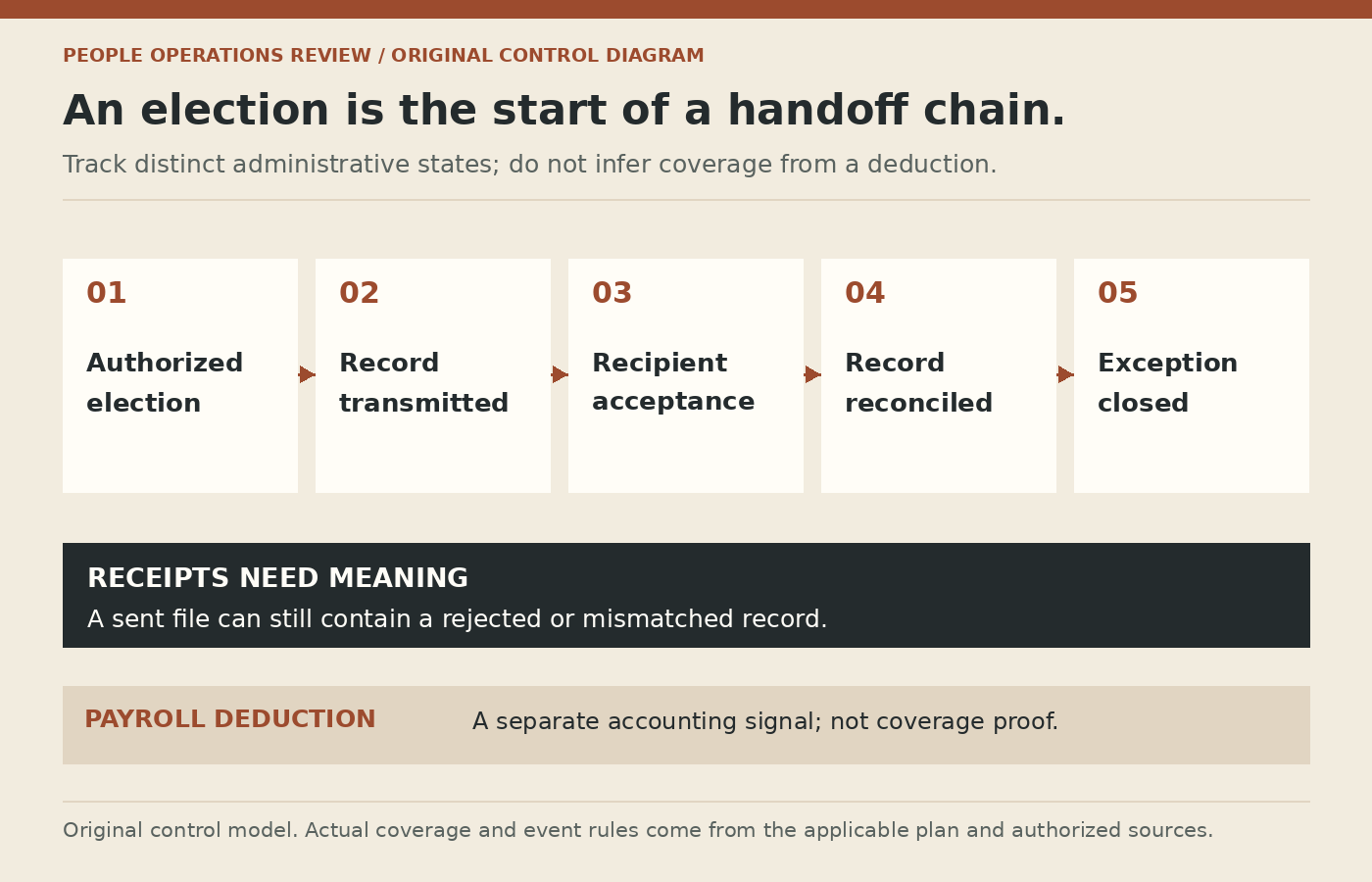
- Authorized event: the election or permitted change is documented through the approved process.
- Transmission: the intended record was sent to the correct downstream recipient.
- Acceptance: the recipient accepted it, or returned an error requiring attention.
- Reconciliation: the resulting record matches the intended person, plan, effective date and other required attributes.
- Closure: mismatches are resolved and the responsible parties receive an accurate status update.
The OneDigital PEO page advertises benefits administration. That broad description does not establish your file frequency, carrier response format or escalation deadlines. Request the actual process and identify which party can supply each status.
Use a fictional batch to expose the hidden queue
Suppose 30 authorized changes are transmitted. The recipient accepts 28 and rejects two. One rejected record is corrected and accepted. The other remains pending because an effective date needs review. A project dashboard that says “30 sent” overstates completion. “29 accepted, one unresolved, reconciliation pending” is more useful if those are the verified facts.
Acceptance alone may still need reconciliation. A system could accept a technically valid record with the wrong intended plan. Review appropriate fields against the authorized event, using access restricted to people who need the information.
| Field | Purpose | Privacy limit |
|---|---|---|
| Internal case reference | Connect the event and response | Avoid personal details in broad project reports |
| Status and effective date issue | Show what remains unresolved | Keep sensitive enrollment details in authorized systems |
| Assigned resolver | Give the next action an owner | Use role/contact directory rather than wide distribution |
| Next decision or follow-up | Prevent silent aging | Do not invent a promised coverage outcome |
| Closure evidence | Prove what changed downstream | Retain only under the approved records process |
Reconcile deductions without treating them as coverage proof
Payroll deductions and benefit records are related, but they are not interchangeable evidence. Build a controlled comparison between the intended deduction instructions, actual payroll result and relevant benefit-administration records. Investigate differences with the parties responsible for those systems.
A correction to one system may require a separate authorized correction elsewhere. Do not assume that changing a payroll deduction automatically changes carrier records, or that a carrier correction automatically produces the right payroll adjustment. Name both owners and obtain closure evidence for both paths where necessary.
Give urgent cases an appropriate route
Agree on the route for a potentially consequential coverage issue before one occurs. The operational team should know whom to contact and how to protect personal information. A worker seeking care needs an accurate, prompt connection to the authorized resource, not a confident guess from a general dashboard.
Do not put medical details in a routine payroll ticket unless the approved process genuinely requires and protects them. The DOL service-provider cybersecurity guidance includes questions about confidentiality and information-sharing terms. Apply those questions to the parties handling plan data, then follow the actual authorized channels.
Close the loop at changes and renewals
Test the process at enrollment, a qualifying change, termination and renewal as applicable to your arrangement. Each event may have different rules and downstream recipients. An annual open-enrollment checklist should not be assumed to cover every midyear event.
Monitor the age and cause of unresolved cases without publishing individual data. A rise in rejections after a mapping change may indicate a system issue, while missing authorization may require an employer-process fix. Bring the distinction into the service review and update the responsibility map where ownership is unclear.